 Americans in Argentina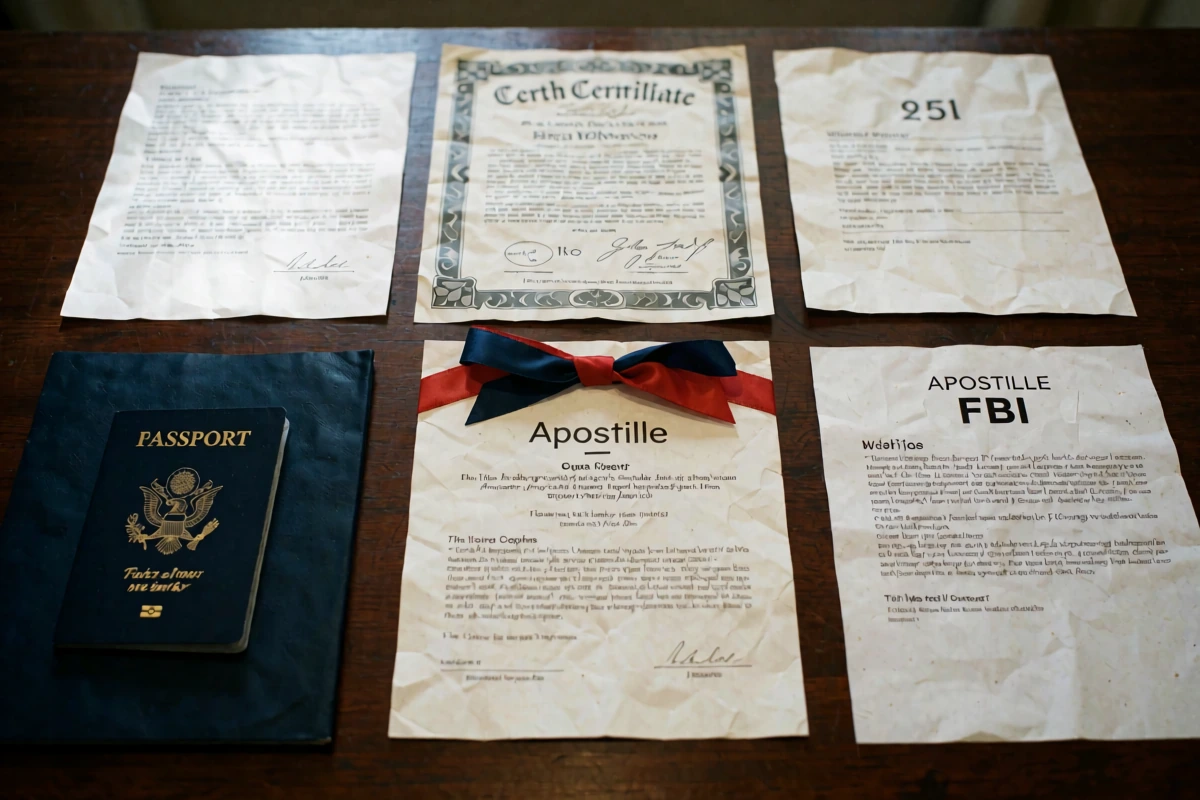
The Argentine recipient decides what counts
The same birth certificate might be requested by Migraciones, a university, or a bank, yet each can set its own filing requirements. A scan is useful for showing a clerk what you have; it becomes a filing document only if that institution accepts electronic copies. Written instructions are particularly helpful when a rejection would put a deadline at risk.
The useful details are whether the office wants an original or a certified copy, how recently it must have been issued, and whether it needs an apostille and a specific kind of translation. An issuance window may be measured at the time of filing rather than when you order the record. Those answers determine what to request in the United States and spare you from paying to prepare the wrong copy.
Authentication comes before the question of translation
An apostille authenticates the origin of a public document for use in another participating country. The competent authority connected to its place of origin handles that step, so records from different states and federal records need to be tracked separately. Authentication does not translate the contents or settle whether the Argentine recipient will accept that particular record.
The recipient may also require a Spanish translation by an Argentine sworn public translator, a traductor público, followed by legalization of the translator's signature through the appropriate professional body. Establish those requirements before commissioning the work. Names deserve a close look: a married surname or missing middle name is easier to explain while the documents are being assembled than after filing.
The embassy handles U.S. consular services
American Citizen Services handles eligible passport applications, Consular Reports of Birth Abroad, and certain notarial services under its appointment rules. Dirección Nacional de Migraciones decides Argentine residence requirements; Argentine banks and agencies decide what they accept. Embassy staff do not translate papers, represent private applicants as lawyers, or arrange Argentine residence.
For a notarization, the recipient should identify the act it needs and its U.S. purpose. A local Argentine deed or transaction may instead call for an escribano, whose role belongs to the Argentine legal system. Other American matters have their own offices: FVAP for overseas voting, the FBI for Identity History Summaries, and the responsible federal program for Social Security benefit questions.
Keep the paperwork's route together
For each record, a small inventory can show its issuing authority, issue date, apostille and translation status, and intended recipient. Secure digital copies help with preliminary questions; irreplaceable originals belong somewhere safe. The receiving office must expressly accept electronic files before a scan can stand in for the required paper.
Keep the recipient's instructions and submission response with that inventory. If an office rejects a document, its explanation can tell you whether the problem is the copy, the authentication, or the translation. That is a better starting point for a repair than ordering every stage again.
A document's destination determines the work needed before it leaves its place of origin. Once the Argentine recipient and American issuer are identified, each copy, apostille, and translation has a specific purpose.
Common questions
Can the U.S. Embassy apostille my American birth certificate?
No. A U.S.-issued certificate follows the apostille process of the competent authority connected to its origin. The Argentine recipient decides whether it needs that authentication.
Does an apostille replace a Spanish translation?
An apostille authenticates the document's origin. The Argentine recipient may also require a traductor público and legalization of the translator's signature.
What if the original American record is lost?
The issuing authority sets the replacement process and eligibility rules. The Argentine office can tell you which kind of replacement copy it will accept before you order one.
Can I vote while my documents are being processed?
Eligible Americans abroad can generally register and request an absentee ballot under their voting state's rules. FVAP and the relevant election office handle that process independently of an Argentine document filing.