 Americans in Argentina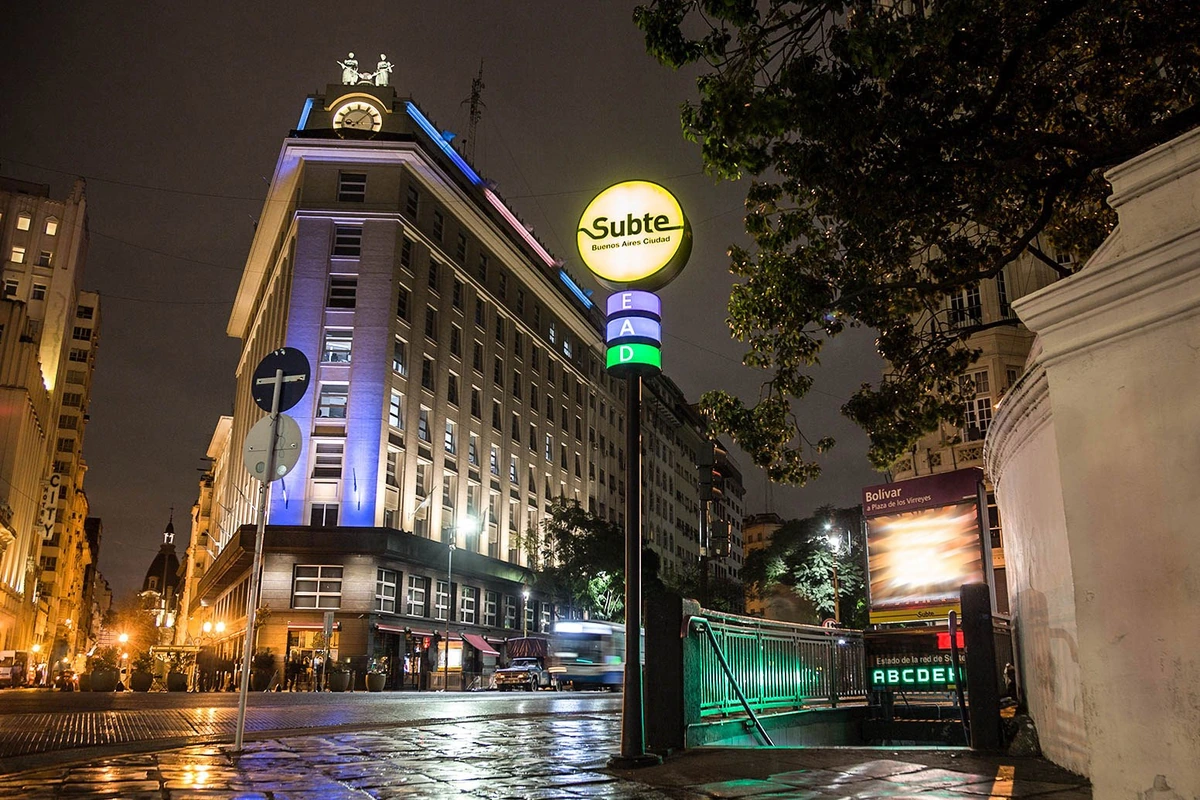
A useful commute starts at the apartment door
A route planner gives a better answer when it has your actual address, destination and departure hour. The total time can disguise a long crossing, an inconvenient station entrance or a final walk with groceries. A quiet-afternoon route may also work differently at school drop-off or rush hour.
Trying the journey before a timed appointment lets the uncertain part become familiar. People wait at different stops on opposite sides of an avenue, and nearby stops may serve different colectivo branches. A note with the stop, direction and destination display is often more useful than a screenshot of the entire network.
SUBE makes the boarding moment simpler
SUBE is the rechargeable card system for eligible Buenos Aires buses, the Subte and metropolitan trains. Argentina.gob.ar explains how to obtain, register and load a card, as well as current fare benefits. Methods and eligibility depend on the service and traveler, so an old group-chat instruction may no longer describe the trip in front of you.
An American contactless bank card is not a universal substitute for SUBE. Payment equipment and accepted methods vary and can change. Once the payment method for your usual route is clear, boarding leaves you free to notice the branch display and your stop instead of solving two unfamiliar problems at once.
The quickest train may mean the longest walk
The Subte crosses central parts of the city, colectivos reach streets beyond its grid, and metropolitan trains run toward outer neighborhoods and municipalities. Buenos Aires Ciudad's transport information helps identify the service; a route result alone says little about today's station entrance or schedule.
A direct bus may beat a faster rail itinerary once stairs, a transfer and the final approach are included. Luggage, a stroller or a child in tow makes that difference more noticeable. Two routes can be useful for different days: one quicker when traveling light, the other easier when the walk or transfer matters.
Accessibility depends on every entrance
Buenos Aires Ciudad publishes accessibility information, but an accessible line on a planner cannot tell you whether today's elevator works or the crossing outside your destination has a usable curb. Someone who needs step-free travel needs current information about the particular stations, vehicle and street segments, from apartment entrance to destination door.
A stroller presents some of the same obstacles, though it does not make a family's needs identical to those of a wheelchair user. A practice trip may reveal steps within a transfer that the map hides. If a necessary lift or entrance remains uncertain, the backup must meet the same access needs, rather than simply being the next line on the screen.
The route home deserves its own rehearsal
A late return changes the last walk, especially with luggage or after a long day. Know the drop-off point rather than relying on a neighborhood name, and keep bags and phones close on crowded vehicles. The alternative might be another stop, a different mode, a taxi or ride service, or waiting somewhere suitable for a later departure.
Cost, weather and access requirements determine which alternative is practical. An address saved offline still works if data service drops; a little extra time helps with a full bus or closed entrance. For an important trip, Buenos Aires Ciudad's current service information matters more than the timetable you learned during an ordinary week.
Soon the stop and the transfer become familiar enough to leave you looking out the window. A second route for a rainy or late return is more useful than knowing every line in the city.
Common questions
Which services take SUBE in Buenos Aires?
Eligible buses, the Subte and metropolitan trains use SUBE. Argentina.gob.ar has the current instructions for obtaining, loading and registering a card, along with applicable fare benefits.
Will my U.S. contactless card work on every service?
Acceptance varies by service and can change. For a regular journey, the current operator payment instructions are more reliable than assuming the same system works across buses, rail and Subte.
Does a route app show every access obstacle?
It may miss a broken lift, difficult curb or stairs inside a transfer. City accessibility information and current details for the actual entrance-to-entrance journey matter when step-free access is needed.
What should I notice on a trial commute?
The side of the avenue, route branch and destination display settle the boarding question. The final walk and a practical return option settle how the journey works on a longer day.